
Plumbing · Grand Prairie, TX
Plumber in Arlington, TX
Arlington plumbing runs on a timeline you can set your watch to: the city grew from 7,692 residents in 1950 to 90,643 by 1970 and 160,113 by 1980, the boom that followed General Motors opening its Arlington assembly plant in 1954, so much of the housing stock is 1950s-70s slab-on-grade construction plumbed with cast-iron drains and galvanized supply lines well past a normal service life. At Mister Plumber Grand Prairie, the coordinated plumbing teams we work with cover Arlington's 12 ZIP codes constantly, fully licensed and insured, running permits through the City of Arlington's own inspections department rather than Grand Prairie's. Arlington sits on the same expansive, montmorillonite-rich clay as the rest of the mid-cities, soil that swells hard after rain and shrinks through the long summer, working every under-slab pipe until something gives.
That clay movement lands on a genuinely wide spread of pipe eras across Arlington's 99.7 square miles, and the crews we coordinate handle all of it — from the original cast-iron and galvanized lines still running under homes near UT Arlington and downtown, through the polybutylene supply lines installed as southwest Arlington filled in during the 1980s-90s, out to the newer PEX-era construction in far-south 76002. Add Arlington's own treated water — the city runs the Pierce-Burch and John F. Kubala plants rather than buying finished water the way Grand Prairie does — and moderately hard surface water steadily scales water heaters and fixtures across every one of those eras at once.
Whether the call is a slab leak swelling one corner of a foundation near the Entertainment District or a cast-iron sewer line finally failing in East Arlington, dial (945) 239-2783 — Open 24 Hours, and dispatch already knows which decade built your street. Arlington sits about 8 miles west of Grand Prairie down Pioneer Parkway (SH-303) or I-30, close enough that a crew already working the mid-cities is usually minutes away, and the same team also covers Mansfield along the same southern corridor.
Local Service
Slab Leak & Aging Pipe Service for Arlington's GM-Boom Housing Stock
Arlington's population went from 7,692 in 1950 to 160,113 by 1980, and the housing from that boom is now the city's biggest plumbing liability — cast-iron and galvanized lines aging out together.

Slab Leak Detection for Arlington's Expansive Clay
Arlington sits on the same montmorillonite-rich, high-shrink DFW clay that runs under the whole mid-cities, and that soil swells hard after rain and contracts through the long summer dry stretch, working the copper and cast-iron lines beneath every slab until they pinhole or shear. A slab leak left undetected feeds the problem it caused, since escaping water swells the clay under one corner and accelerates the same movement that started the leak. Our teams use electronic and acoustic detection to pinpoint a leak's exact location before anyone opens a slab.
Watch for warm spots on the floor, a water meter that keeps spinning with every fixture off, or an unexplained bill jump — classic slab-leak signs whether the house sits near downtown or out toward Southwest Arlington.
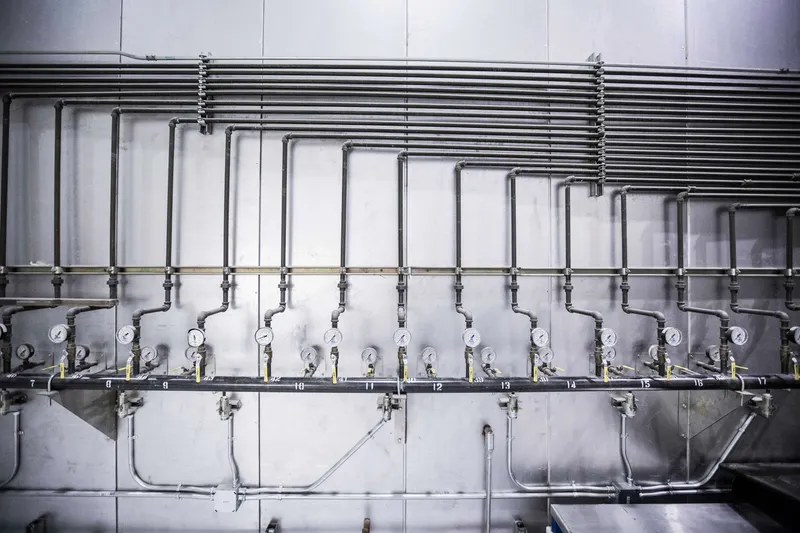
Cast-Iron Sewer Line Repair Near UT Arlington and Downtown
DFW builders ran cast-iron drains under slabs into the mid-1980s, and homes built before 1980 near UT Arlington and downtown commonly still run their original clay and cast-iron sewer lines — lines that typically last 50-80 years, meaning much of Arlington's boom-era housing is aging out of its drain lines at once. That failure usually shows up as slow drains across the house, gurgling, or sewage backing up at the lowest fixture.
We run a camera inspection first to confirm cast iron versus clay versus an already-repiped section before recommending trenchless replacement or a traditional dig.
Galvanized & Polybutylene Repipe Work Across Arlington's Housing Eras
Arlington's growth left three distinct supply-line generations stacked across the city: original galvanized steel from the 1950s-60s boom in the oldest neighborhoods, polybutylene installed as Southwest Arlington filled in through the 1980s-90s (used nationwide from the late 1970s to the mid-1990s before failing en masse at its crimped fittings), and PEX in the newer far-south construction near 76002. Galvanized corrodes from the inside and chokes pressure years before it leaks outright; polybutylene fails at its fittings with little warning.
We evaluate which era a given home falls into before recommending a spot repair versus a full repipe, since a house on original galvanized rarely benefits from patching one section while the rest of the system is the same age.
Local Service
Water Heater & Hard-Water Service on Arlington's Own Treated Water
Unlike Grand Prairie, which buys finished water from Dallas and Fort Worth, Arlington treats its own — with its own maintenance realities.
Water Heater Repair & Replacement on Arlington's Pierce-Burch Water
Arlington treats its own drinking water rather than purchasing it from a neighboring city — raw water from Lake Arlington feeds the Pierce-Burch plant, and TRWD's East Texas reservoirs (Cedar Creek, Richland-Chambers) supply the John F. Kubala plant. That surface water arrives moderately hard, and steady scale buildup shortens a water heater's working life toward the low end of the typical 8-12-year range for gas, 10-15 for electric.
The teams we coordinate with handle both tank replacement and tankless conversion, and every water heater swap gets pulled through Arlington's own city permit — separate from Grand Prairie's Building Inspections — with rough-in and final inspection scheduled as part of the job.
Pierce-Burch Rebuild Era: What Arlington's Aging Water System Means for Homeowners
Arlington's Pierce-Burch Water Treatment Plant — one of the two plants treating the city's TRWD raw water — is mid-way through a $112.5 million improvement project to replace aging treatment infrastructure, a visible sign of how much of the city's water system dates to its mid-century boom, right alongside individual homes' original fixtures, water heaters, and supply lines.
We treat an aging Arlington home's plumbing the same way the city treats its infrastructure — evaluate condition first, then decide between a targeted repair and a fuller update.
Hydro Jetting & Drain Cleaning for Arlington's Cast-Iron Lines
Standard drain cleaning runs $150-$500 and clears everyday kitchen and bathroom clogs, but Arlington's older cast-iron lines — many original to homes built before 1980 near UT Arlington and downtown — build up interior scale that traps debris faster than newer PVC. Hydro jetting, roughly $350-$1,000, clears that buildup with high-pressure water rather than a mechanical snake.
On genuinely fragile cast iron, jetting at full pressure can be too aggressive, so the crews we coordinate assess pipe condition with a camera first and adjust pressure accordingly — worth taking seriously on a line already 50-plus years into its expected 50-80-year life.
Local Service
Emergency Plumbing Coverage Across Arlington's 99.7 Square Miles
Fast Dispatch From I-30 to Southwest Arlington
Arlington is bounded by I-30, I-20, SH-360 and US-287, with Cooper Street (FM 157) and Pioneer Parkway (SH-303) as the main residential arteries connecting Downtown Arlington, the Entertainment District, East Arlington, North Arlington and Southwest Arlington. At 99.7 square miles, it's the largest of the three suburbs we cover, and dispatch routes a crew already in the mid-cities toward whichever district the call comes from.
Whether the address sits near AT&T Stadium and Globe Life Field or out toward the older east-side neighborhoods, the coordinated teams know which pipe era to expect on arrival.
Burst Pipe & Freeze Response After the February 2021 Freeze
DFW Airport hit -2°F on February 16, 2021 during 139 consecutive hours below freezing, the coldest reading since 1899, and Arlington's aging galvanized and polybutylene lines burst right alongside newer PEX runs that week. State Farm alone paid out more than $628 million on frozen-pipe claims between 2024 and June 2025, averaging over $30,000 per claim — freeze risk didn't end with Uri.
If a pipe bursts, shut off the main water supply first, then call (945) 239-2783 — Open 24 Hours, with dispatch already familiar with which neighborhoods run the oldest, most freeze-vulnerable lines.
Serving Arlington and Mansfield Along the Southern Mid-Cities Corridor
Arlington and Mansfield sit along the same southern mid-cities corridor, with Cooper Street (FM 157) tying the two together. A crew finishing a slab leak repair in Southwest Arlington is often minutes from a Mansfield job the same afternoon, and both cities share the same expansive clay soil, even though Mansfield's newer post-1990 stock plumbs almost entirely in copper and PEX rather than Arlington's mixed cast-iron and galvanized inventory.
That overlap means an Arlington homeowner isn't waiting on a special trip — the coordinated crews already work this stretch of the Metroplex daily.
Arlington is the largest of the three suburbs we cover out of Grand Prairie, and its plumbing calls come from every era of the city's growth at once — a 1950s cast-iron sewer line near UT Arlington failing the same week a polybutylene line from the 1980s southwest Arlington boom lets go across town. The same Mister Plumber Grand Prairie teams cover all 12 of Arlington's ZIP codes, and the coordinated crews also work Mansfield along the same southern mid-cities corridor.
Because Arlington runs its own water treatment and its own city permitting, the work here leans heavily on water heater repair and leak detection for slab leaks in the expansive clay, alongside sewer lateral repair for the cast-iron and galvanized lines still running under the city's boom-era housing stock. Reach us at (945) 239-2783 — we're Open 24 Hours, and dispatch already knows which decade built your Arlington street.
Service Area
Serving Arlington & Nearby
Frequently Asked Questions
How much does a plumber cost in Arlington, TX?
Pricing depends heavily on the job and the time of day it's needed. A standard drain cleaning runs $150-$500, water heater repair $150-$800, and a full tank water heater replacement $1,200-$3,500 installed, while slab leak repair typically lands between $2,000 and $6,000 or more. Emergency after-hours fees generally add $150-$500 on top of the repair. Because Arlington's housing spans original 1950s-60s galvanized, 1980s-90s polybutylene and newer PEX, we give a firm quote after an on-site diagnosis.
How do I know if I have a slab leak in my Arlington home?
The classic signs are a warm or damp spot on an otherwise dry floor, a water meter that keeps spinning with every fixture off, and a water bill that jumps without explanation. Arlington's expansive clay soil makes slab leaks especially common, since the soil's swelling and shrinking works copper and cast-iron lines under the foundation until they pinhole or shear. An undetected leak accelerates the problem by swelling the clay under one corner. Call before it shifts the foundation further — electronic detection typically runs $150-$600 and pinpoints the exact location.
Why do so many older Arlington homes still have cast-iron sewer lines?
DFW builders ran cast-iron drains under slab foundations into the mid-1980s, and Arlington's boom from 7,692 residents in 1950 to 160,113 by 1980 means much of the housing near UT Arlington and downtown was built directly in that cast-iron window. Cast iron typically lasts 50-80 years, so homes from the early boom years are now well into their expected failure window. Signs of a failing line include slow drains throughout the house, gurgling, or backups at the lowest fixture. A camera inspection confirms the pipe's actual condition before we recommend trenchless or traditional replacement.
What's different about Arlington's water compared to Grand Prairie's?
Grand Prairie purchases treated surface water from Dallas, Fort Worth and Midlothian, but Arlington treats its own — raw water from Lake Arlington feeds the Pierce-Burch plant while TRWD's East Texas reservoirs supply the John F. Kubala plant. Pierce-Burch is currently mid-way through a $112.5 million improvement project to replace aging treatment infrastructure, reflecting how much of the water system dates to its mid-century growth. Day to day, this doesn't change water quality dramatically — Arlington's surface water still arrives moderately hard and still scales water heaters — but the treatment source genuinely differs from a neighboring city's plant.
Do I need a permit for plumbing work in Arlington?
Plumbing work inside Arlington's city limits requires a permit through the City of Arlington's own inspections department, entirely separate from Grand Prairie's Building Inspections process even though the two cities are minutes apart. Texas law also requires the permit be pulled under a TSBPE-licensed Responsible Master Plumber, who assumes legal responsibility for the work. We confirm Arlington's current registration and fee requirements before starting a job and handle the permit application and inspection scheduling, so a homeowner isn't tracking down which office to call.
How long does sewer line replacement take in Arlington, and will my yard be dug up?
Trenchless sewer replacement, running $4,000-$15,000 or more, typically finishes in 1-2 days and avoids digging a continuous trench by pulling a new pipe through the old one's path. Traditional open-trench replacement takes longer, generally 2-5 days, and requires excavating along the pipe's route, which matters more on a lot with mature landscaping near UT Arlington or the older east-side neighborhoods. Given how much of Arlington's cast-iron inventory predates 1980, we run a camera inspection first to confirm the pipe's condition and recommend whichever method fits the yard and budget.
Is hydro jetting safe on Arlington's older cast-iron pipes?
It can be, but it depends on the pipe's actual condition, which is why we camera-inspect before jetting rather than assuming. Hydro jetting, typically $350-$1,000, clears years of interior scale from cast-iron lines far more thoroughly than a mechanical snake, which matters on Arlington's older east-side and near-UTA housing. On a line already deteriorated toward the end of its 50-80-year expected life, full-pressure jetting can aggravate weak spots. We adjust pressure or recommend an alternative once the camera shows the pipe's real condition.
What should I do immediately if a pipe bursts in my Arlington home?
Shut off the water at the home's main supply valve first — that single step stops the flooding faster than anything else while waiting for a plumber. Open a low faucet to relieve pressure in the lines, move anything valuable away from the water, and call an emergency plumber rather than attempting a repair yourself, especially on Arlington's mix of original galvanized, polybutylene and PEX lines. Burst pipes were common enough after February 2021's -2°F reading at DFW Airport that dispatch treats them as a standard emergency call, typically arriving within 30-90 minutes.
What are the signs my water heater is about to fail in Arlington?
Watch for rusty or discolored hot water, a tank rumbling or popping from sediment buildup, water pooling at the base of the unit, or a noticeable drop in hot water volume or temperature. Arlington's moderately hard surface water from the Pierce-Burch and Kubala plants steadily deposits scale inside a tank, pushing a unit toward the lower end of its typical 8-12-year lifespan for gas models and 10-15 for electric. Since water heating is about 18% of a home's energy use, a scaled unit often shows up as a rising bill before it shows up as a leak.
How often should drains be professionally cleaned as maintenance in Arlington?
For a typical Arlington home without a known cast-iron issue, an annual or biennial drain cleaning catches grease, soap scum and root intrusion before they become a full clog, and it's inexpensive insurance at $150-$500 compared to an emergency call. Homes with original cast-iron lines near UT Arlington or downtown, where interior scale and pipe roughness accelerate buildup, often benefit from more frequent maintenance, sometimes annually with a hydro jetting pass every few years to keep the line genuinely clear. Recurring slow drains on the same yearly schedule usually signal the pipe condition needs a camera inspection rather than another round of routine cleaning.

Get a Straightforward Plumbing Quote for Your Arlington Property
24/7 dispatch that already knows Arlington's clay, cast iron and permits — Open 24 Hours.
Call (945) 239-2783