Plumbing · Grand Prairie, TX
Plumber in Irving, TX: Trusted Service From the Heritage District to Las Colinas
Plumbing in Irving means working two very different housing eras a few miles apart. At Mister Plumber Grand Prairie, the plumbing teams we coordinate with have covered Irving's 256,684 residents across all six ZIP codes — 75038, 75039, 75060, 75061, 75062 and 75063 — spread over 67.97 square miles bounded by SH-183 (Airport Freeway), SH-114 (John Carpenter Freeway), SH-161 (President George Bush Turnpike), Loop 12 and I-635 (LBJ Freeway).
Irving incorporated in 1914 and grew from just 2,621 residents in 1950 to 45,985 by 1960, 97,260 by 1970 and 256,684 by the 2020 census, and that growth curve split the city into two plumbing worlds. South Irving's Heritage District carries the metro's classic aging stack — galvanized supply lines and cast-iron sewer pipe run under the slab from the 1960s through the mid-1980s — while Las Colinas and Valley Ranch, master-planned from the 1980s onward, sit on copper and PEX with a different problem set: slab movement and builder-grade water heaters aging out in identical cohorts across whole subdivisions. The teams we coordinate with are licensed and insured to work both.
Call for emergency plumbing dispatch any time of day or night, and you'll reach a team that knows Irving block by block — from the Toyota Music Factory and University of Dallas corridor in Las Colinas to the older streets nearer the Heritage District. Open 24 Hours, backed by 15 years serving the Grand Prairie–Irving stretch of DFW, at (945) 239-2783.
Local Service
Plumbing for South Irving's Heritage District Homes
South Irving's Heritage District boomed in the 1950s and 60s, and its plumbing is aging on the same schedule.
Cast-Iron Sewer Line Repair for South Irving's 1960s-80s Homes
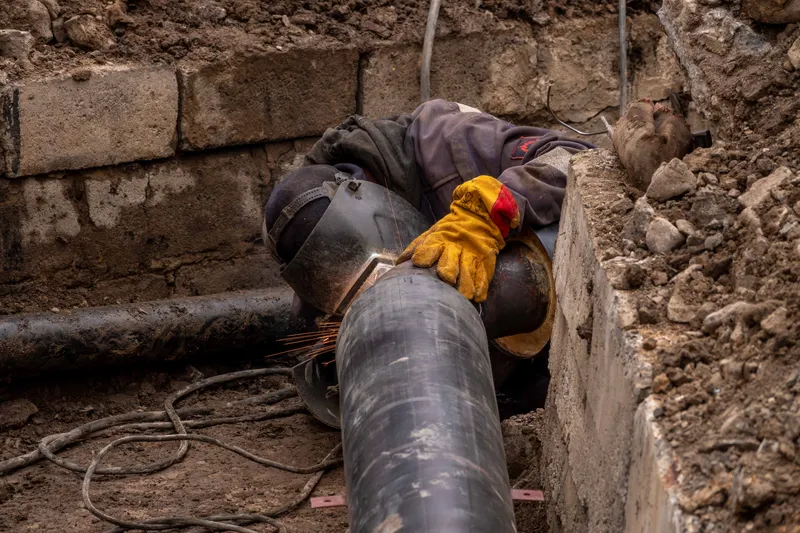
Irving's Heritage District anchors South Irving, and the homes there trace back to the city's 1950s and 60s boom — Irving grew from just 2,621 residents in 1950 to 97,260 by 1970, and most of that growth built out with cast-iron sewer line under slab foundations, the standard drain material used across DFW from the 1960s into the mid-1980s. Cast iron typically lasts 40 to 60 years, so much of South Irving's original sewer line is now at or past that window, showing up as slow drains, sewage odor in the yard, or a low spot where a line has partially collapsed.
We handle trenchless sewer replacement with a camera inspection first, so a homeowner knows whether trenchless lining solves the failure or a section needs full replacement.
Galvanized Supply Line & Water Heater Replacement in the Heritage District
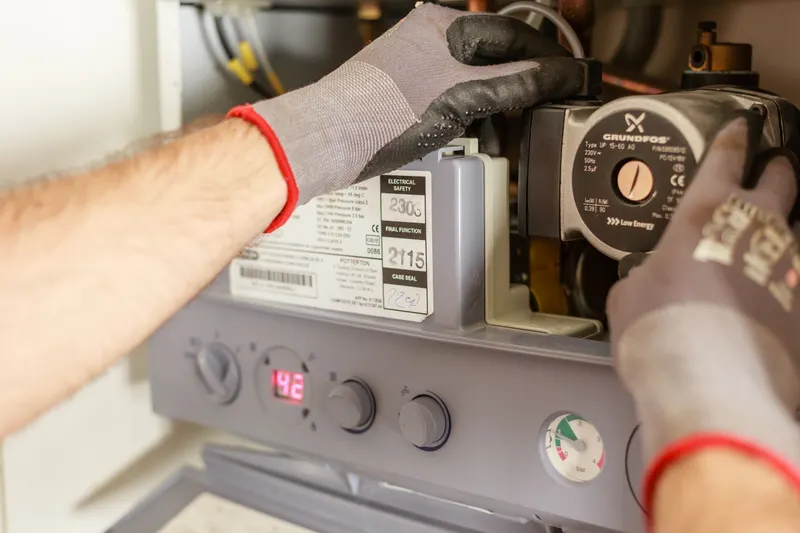
South Irving's original 1950s and 60s housing stock didn't just get cast-iron drains — it got galvanized steel supply lines too, and galvanized pipe corrodes from the inside, narrowing its interior diameter over decades until water pressure drops noticeably even though nothing looks wrong from outside the wall. Many of these homes still run an original or first-replacement water heater well past normal service life, since conventional tank units typically last only 8 to 12 years.
We replace failing water heaters and diagnose galvanized corrosion on the same visit for Heritage District calls, because in a house this age the two problems usually show up together.

Slab Leak Detection on Trinity Floodplain Soil in South & Central Irving
South and central Irving sit low, inside the Trinity River's floodplain, where the ground is alluvial soil that holds moisture year-round and shifts with the seasonal wet-dry cycle instead of the harder shrink-swell clay that dominates the uplands elsewhere in the mid-cities. That constant, moisture-driven ground movement works slab-run copper and cast-iron lines the same way clay heave does farther south — stressing joints until a pinhole leak opens under the concrete, often with no visible water nearby.
Our electronic leak detection locates a slab leak by sound and thermal signature before anyone cuts into the floor, which matters on floodplain lots sitting on wet, unstable ground.
Local Service
Plumbing for Las Colinas & Valley Ranch's Newer Construction
Las Colinas and Valley Ranch grew decades later on copper and PEX, so the failures here look completely different.
Copper & PEX Repair for Las Colinas' Master-Planned Homes
Las Colinas broke ground as a master-planned development starting in the 1980s, decades after South Irving's postwar boom, and the difference shows in the pipe under every slab — copper and PEX instead of the cast iron and galvanized steel running through the Heritage District. That newer material doesn't corrode or scale the way older metal does, but it isn't immune to failure: PEX fittings can loosen, and copper still pinholes under enough slab movement, just less often.
A Las Colinas call usually means diagnosing a specific fitting or joint failure rather than a whole system reaching end of life, and the teams we coordinate with carry copper and PEX repair materials on every truck.
Builder-Grade Water Heater Replacement in Valley Ranch
Valley Ranch and Las Colinas both filled in subdivision by subdivision, which means the builder-installed water heaters throughout entire streets went in within months of each other — and now they're aging out the same way, in cohorts rather than one house at a time. A resident who hears a neighbor mention a water heater failure is often looking at the same clock on their own unit.
We track tank age against install date for water heater replacement calls in Valley Ranch, because when one builder-grade unit fails, several more on the same block are usually within a year or two of the same failure.
Slab Leak Repair Near Toyota Music Factory & Las Colinas
Las Colinas is where Irving's entertainment and business core sits today — the Toyota Music Factory draws concerts and diners, and the University of Dallas campus anchors the community just south of it — and the homes and townhomes filling in around both are almost entirely 1980s-and-newer slab construction. Even on copper and PEX, slab movement still opens leaks over enough years, just on a longer timeline than the older cast-iron stock across town.
A slab leak near the Toyota Music Factory corridor or University of Dallas shows the same signs as anywhere else — a warm floor spot, a spinning meter, an unexplained bill jump — and we run the same electronic detection process first.
Local Service
Fast Response Across Irving's 67.97 Square Miles
Coverage From DFW International Airport to the Trinity River Floodplain
Part of DFW International Airport sits inside Irving's city limits, and the Trinity River's Elm Fork and West Fork branches define the low, wet ground running along the city's south and east sides — landmarks that bookend how much geographic variety one Irving service call can cover. A property near the airport corridor faces different soil conditions than one down in the Trinity floodplain a few miles away, even though both sit inside the same 67.97 square miles.
Dispatch treats Irving as one coverage area regardless of which end of the city a call comes from.
Irving Plumbing Permits & City of Irving Inspections
Plumbing work inside Irving runs through the City of Irving's own inspections department, not through Grand Prairie's Building Inspections Division — a separate permitting authority with its own registration requirements and inspection sequence, the way Arlington and Mansfield each run their own systems too. Texas law requires that permit be pulled under a Responsible Master Plumber registered with the Texas State Board of Plumbing Examiners regardless of which city issues it.
The teams we coordinate with confirm Irving's current registration and inspection requirements before a permitted job starts, so a homeowner isn't tracking down which office to call.
Serving Irving and Arlington Together
Irving and Arlington sit on opposite sides of Grand Prairie along the same DFW corridor, and a crew finishing a call in one city is often not far from a job in the other the same day. Both cities share the mid-cities' broader plumbing reality — aging pipe eras stacked from decades of growth, moderately hard purchased surface water, and slab foundations that move enough to open leaks over time.
That overlap means an Irving homeowner isn't waiting on a dedicated trip; the coordinated teams already work this stretch of the Metroplex daily.
Irving is a study in two plumbing eras a few miles apart, and the Mister Plumber Grand Prairie teams we coordinate with work both sides constantly — Heritage District cast iron and galvanized supply on one end, Las Colinas and Valley Ranch copper and PEX on the other.
Whether the call is emergency plumbing for a burst line during the next North Texas freeze, leak-detection work for a slab leak on Trinity floodplain ground, or a water heater reaching the end of its cohort's lifespan in Valley Ranch, the same coordinated crews cover Irving daily alongside Arlington a few miles south. Call (945) 239-2783 any time — we're Open 24 Hours, and dispatch already knows which era of Irving plumbing your address falls into.
Service Area
Serving Irving & Nearby
Frequently Asked Questions
How much does an emergency plumber cost in Irving after hours?
An after-hours or emergency service call in Irving typically runs $150 to $500 just for the dispatch and diagnosis, before any repair cost is added, compared to a standard daytime service call. The actual number depends heavily on which part of Irving you're in — a burst galvanized supply line in a South Irving Heritage District home is often a different repair than a PEX fitting failure in Las Colinas. We quote the repair itself before work begins, so the after-hours premium is never a surprise buried in the final bill.
How do I know if I have a slab leak in Irving?
The classic signs of a slab leak are a warm or damp spot on an otherwise dry floor, a water meter that keeps spinning even with every fixture in the house turned off, and a water bill that jumps without any obvious explanation. In south and central Irving, the ground sits inside the Trinity River floodplain on alluvial soil that holds moisture and shifts seasonally, which stresses slab-run pipe the same way expansive clay does elsewhere in the mid-cities — just on wetter, lower ground. If you notice any of these signs, especially in an older South Irving home, electronic leak detection can pinpoint the exact location before any concrete gets opened.
What are the signs my water heater is about to fail in Irving?
Rusty or discolored hot water, a tank that makes rumbling or popping noises from sediment buildup, and water pooling at the base of the unit are all signs a water heater is nearing failure. Conventional tank water heaters typically last only 8 to 12 years, and in South Irving's older Heritage District homes, many units are original or a first replacement well past that window. In Las Colinas and Valley Ranch, builder-installed water heaters across a subdivision tend to age out in the same year or two, so one neighbor's failure is often a preview of what's coming next door.
How long does sewer line replacement take in Irving, and will my yard be dug up?
Trenchless sewer replacement typically takes 1 to 2 days and requires only small access pits rather than a fully excavated trench, while traditional open-trench replacement generally takes 2 to 5 days and does disturb the yard along the full pipe run. In South Irving's Heritage District, where cast-iron sewer line installed from the 1960s through the mid-1980s is now reaching the end of its typical 40- to 60-year lifespan, trenchless methods are usually the better fit when the line's condition allows it. We run a camera inspection first on every Irving sewer call to determine which method actually applies before quoting either option.
Is hydro jetting safe for Irving's older cast-iron pipes?
Hydro jetting is safe for the great majority of cast-iron sewer lines, including much of South Irving's 1960s-to-mid-1980s stock, and typically takes 1 to 3 hours and runs $350 to $1,000 depending on the line's length and how severe the buildup is. The exception is a line already compromised by corrosion or a partial collapse, where high-pressure water can worsen an existing weak spot rather than just clear it. We always run a camera inspection before jetting an older Irving sewer line, so we know the pipe's actual condition rather than assuming every cast-iron line can handle full pressure.
Do I need a permit for plumbing work in Irving?
Yes — plumbing work inside Irving city limits requires a permit through the City of Irving's own inspections department, which runs separately from Grand Prairie's Building Inspections Division and has its own registration and inspection requirements. Texas law also requires that permit be pulled under a Responsible Master Plumber registered with the Texas State Board of Plumbing Examiners, regardless of which city issues the permit itself. The teams we coordinate with confirm Irving's current requirements and handle the permit application and inspection scheduling as part of the job, so you're not the one tracking down which office to call.
Why does Irving have hard water, and does it affect my pipes?
Most of Irving's drinking water is pumped from Lake Chapman to Lewisville Lake and treated for the city by the City of Dallas, supplemented with additional treated water purchased directly from Dallas — Irving owns its distribution pipes but not the treatment plant supplying them. That surface water arrives moderately hard, which over years leaves mineral scale inside water heater tanks and narrows the interior of older galvanized supply lines in South Irving homes especially. Scale buildup is a slow process, but it's part of why we check tank condition and supply-line diameter on any Irving water heater or low-pressure call.
What should I do if a pipe bursts in my Irving home?
Shut off the water at the main valve first — usually near the street-side meter or where the line enters the house — before doing anything else, since even a small crack can release serious volume fast: a crack as small as one-eighth of an inch can put out over 250 gallons of water a day. Once the water is off, shut off power or gas to any affected appliance and call for emergency dispatch rather than attempting a temporary patch yourself. We're Open 24 Hours across Irving, and a burst pipe is exactly the kind of call our after-hours dispatch is built to handle first.
What if I smell gas in my Irving home?
If you smell gas — typically a rotten-egg odor from the additive used in natural gas — leave the house immediately without flipping any light switches or using anything that could spark, then call your gas utility's emergency line and a licensed plumber from a safe distance away. Never attempt to locate or fix a suspected gas leak yourself; it requires pressure testing and specialized detection equipment to find safely. The teams we coordinate with handle gas leak detection and repair for Irving homes on both sides of the city's housing-era split, from older Heritage District gas lines to newer Las Colinas construction.
How often should drains be professionally cleaned in Irving?
Most Irving homes benefit from professional drain cleaning about once a year as routine maintenance, but South Irving's older cast-iron sewer lines often need more frequent attention since decades of scale and mineral buildup narrow the pipe's interior diameter faster than in newer PVC or PEX systems. A kitchen or main line that's slow more than once every few months is usually a sign maintenance is overdue rather than an isolated clog. Regular cleaning is also meaningfully cheaper than an emergency call after a full backup, particularly in a Heritage District home where the underlying pipe is already older.

Get Fast, Coordinated Plumbing Service Anywhere in Irving
From the Heritage District to Las Colinas — Open 24 Hours.
Call (945) 239-2783