
Plumbing · Grand Prairie, TX
Water Heater Repair & Replacement in Grand Prairie, TX
Mister Plumber Grand Prairie coordinates water heater repair and replacement — tank and tankless — for homeowners and businesses across Grand Prairie, Arlington, Irving, and Mansfield — 15 years of local coordination, with calls answered 24 hours a day. A water heater rarely fails without warning: rusty or metallic-tasting hot water, a popping or rumbling tank, a pilot light that won't stay lit, or a slow puddle at the base of the unit are the signs that show up before a house loses hot water entirely, and when a tank does let go completely, it's usually all at once, at the worst hour. Call (945) 239-2783 for a same-day evaluation.
Grand Prairie's water is a real factor in how long a water heater lasts here. The city buys treated surface water from Dallas, Fort Worth, and Midlothian, supplemented by up to six groundwater wells through peak summer, and that supply arrives moderately hard at roughly 90 parts per million — enough to leave steady mineral scale inside a tank's heating element, which is part of why a unit rated for 8 to 12 years starts struggling closer to year six without periodic flushing. Newer subdivisions add a second pattern: whole streets of post-1990 construction in our Mansfield coverage area got the same builder-grade tank installed the same year, and tend to fail out in the same few-year window rather than one house at a time.
This page covers water heater repair and replacement specifically — diagnosing a failing tank or tankless unit, repairing what can be repaired, and replacing what can't, to code. If a unit has already let go and water is actively flooding a utility closet right now, that's an emergency covered by our 24/7 emergency team; and if what looks like a water heater leak turns out to be a slab or foundation leak nearby instead, that diagnostic work belongs on the slab-leak diagnostic page. Water heater work is its own scope, and it's the one this page is built around.
A water heater call runs the same sequence every time: diagnose whether the failure is repairable — a heating element, thermocouple, or igniter — or has crossed into replacement territory, quote it in writing, then do the work to Grand Prairie's permit requirements. Every residential water heater replacement in the city needs an approved Building Inspections permit, with a rough-in and a final pressure-test inspection, and the plumbing teams coordinated here pull that permit as standard practice, not an upsell.
What We Do
Our Water Heater Repair & Replacement Services in Grand Prairie
Not every failing water heater needs to be replaced, and not every replacement is the same job. Here's how the coordinated teams scope each type of call.
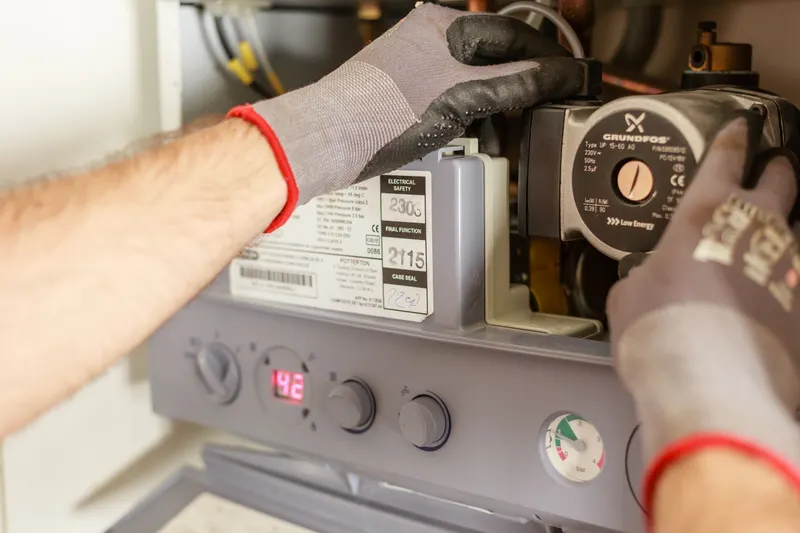
Tank Water Heater Repair & Replacement
A tank water heater repair — a new heating element, thermocouple, gas valve, or igniter — typically runs $150 to $800 and takes 1 to 2 hours once the failure is diagnosed. A pilot light that won't hold or lukewarm water is often a component fix, not a full swap.
When the tank itself has failed — rusted through or leaking at the seams — replacement runs $1,200 to $3,500 installed and takes 2 to 4 hours, matched to the home's fuel type and demand. Gas tanks typically last 8 to 12 years here and electric 10 to 15, so age is often the deciding factor.

Tankless Water Heater Installation
A tankless, on-demand installation typically runs $2,500 to $6,500 and takes 4 to 8 hours, since converting from a tank usually means new gas or electrical service sized correctly and a dedicated vent run rather than a drop-in swap. For homes using 41 gallons of hot water a day or less, a tankless unit can be 24% to 34% more energy-efficient than a comparable tank; homes closer to 86 gallons a day still see an 8% to 14% gain.
Water heating already accounts for roughly 18% of a home's energy use — the second-largest expense after heating and cooling — worth asking about before defaulting to another tank.

Permitted, Pressure-Tested Installs
Every residential water heater replacement inside Grand Prairie city limits — tank or tankless — needs an approved permit from the city's Building Inspections Division before work starts, regardless of whether the address falls in the Dallas, Tarrant, or Ellis County portion of the city. Permitted jobs get a rough-in inspection and a final inspection that includes a pressure test.
The teams coordinated here work under a Responsible Master Plumber registered with the Texas State Board of Plumbing Examiners, so both inspections get scheduled as a normal part of the job.
The Benefits
Why Water Heater Care Looks Different in Grand Prairie
A water heater here isn't fighting just age — it's fighting the water and the housing stock it's plumbed into. Getting ahead of both keeps a repairable unit repairable.
Built Around Grand Prairie's ~90 PPM Water
Grand Prairie's purchased surface water arrives moderately hard at around 90 parts per million, and the USGS classifies anything above 61 mg/L as moderately hard — meaning scale accumulates inside a tank's heating element from day one. That buildup makes the element work harder, a real contributor to a tank falling short of its expected 8-to-12-year lifespan.
Matched to How Each Neighborhood Was Built
A replacement in an original-construction Grand Prairie or an Arlington-area home built before the mid-1980s often means working around older galvanized supply lines and a tight utility closet, while a heater going into a post-1990 Mansfield-area subdivision is more likely part of a whole street replacing builder-grade units in the same few-year window. Either way, sizing the right unit depends on knowing which era of house it's going into.
Energy Savings That Show Up on the Bill
Water heating runs about 18% of a typical home's energy use, second only to heating and cooling, so the efficiency of the unit installed has a direct, ongoing effect on the bill rather than being a one-time cost. A correctly sized tankless unit — or even a properly matched tank replacement — recovers efficiency an old, scaled-up unit had been quietly losing.
Why Us
Why Grand Prairie Chooses Us for Water Heater Repair & Replacement
Fifteen years of coordinating water heater work on the mid-cities' hard water and mixed housing stock means the right fix gets picked the first time.
Repair-First Diagnosis, Not a Reflex Replacement
Some outfits quote a full replacement on every call regardless of what's actually wrong. The teams coordinated here diagnose the specific failure first — element, thermocouple, igniter, or gas valve — because a $150-to-$800 component repair is the right call more often than a straight swap.
Permitted and Pressure-Tested to Code
Grand Prairie requires an approved Building Inspections permit for every residential water heater replacement, with a rough-in inspection and a final pressure test before the job is signed off. The plumbing teams coordinated here pull that permit and schedule both inspections as a matter of course.
Licensed, Insured Teams Under a Responsible Master Plumber
The plumbing teams coordinated here are fully licensed and insured, working under a Responsible Master Plumber registered with the Texas State Board of Plumbing Examiners, to Uniform and International Plumbing Code standards. That licensing structure is what lets a permit get pulled and an installation get signed off by the city.
Not sure whether what's going on is the water heater or something else? An active flood from a burst supply line or failed tank right now is a same-hour emergency call, and warm spots or a spinning meter with the water heater ruled out points to the electronic leak detection page instead. For the full list of what gets coordinated across Grand Prairie, the wider Arlington area, and the Mansfield service area, see everything we coordinate here — it's the same Grand Prairie plumbing teams behind every job on this page.
Frequently Asked Questions
How much does water heater repair or replacement cost in Grand Prairie?
A tank water heater repair — a new heating element, thermocouple, or igniter — typically runs $150 to $800 and takes 1 to 2 hours once the failure is diagnosed. Full tank replacement runs $1,200 to $3,500 installed, while a new tankless installation runs $2,500 to $6,500 since it usually involves new gas or electrical service and dedicated venting. The right number depends on fuel type, tank size, and whether existing gas, electrical, or venting can be reused, which is why a firm quote comes after an on-site look rather than a phone estimate.
What are the warning signs a water heater is about to fail?
Rusty or metallic-tasting hot water, a popping or rumbling sound from sediment baked onto the heating element, a pilot light that won't stay lit, and water that never gets fully hot are the most common signs a tank is nearing the end of its life. A small puddle at the base of the unit is usually the clearest signal, since it typically means the tank has started to corrode through rather than a fitting simply needing to be tightened. Catching any of these early turns a scheduled replacement into a planned job instead of a middle-of-the-night call.
Should I repair my water heater or replace it?
Age is usually the deciding factor: gas tanks typically last 8 to 12 years and electric tanks 10 to 15, so a unit failing inside that window is often worth repairing for $150 to $800, while one at or past it usually makes more sense to replace. A tank that's already leaking at the seams or visibly rusted through isn't a repair candidate regardless of age, since the tank itself has failed structurally. We diagnose the specific failure on site and give a straight recommendation rather than defaulting to whichever job pays more.
Do I need a permit to replace a water heater in Grand Prairie?
Yes. The City of Grand Prairie requires an approved Building Inspections permit for all residential plumbing work, and that explicitly includes water heater replacement, regardless of which county — Dallas, Tarrant, or Ellis — the address falls in. Permitted jobs get a rough-in inspection and a final inspection that includes a pressure test, both scheduled by the plumber, and skipping the permit exposes both the plumber and the homeowner to enforcement action. The plumbing teams coordinated here pull that permit and schedule both inspections as standard practice on every job.
How long does a water heater installation take?
A straightforward tank-to-tank replacement usually takes 2 to 4 hours on site, including removing the old unit, setting the new one, and connecting supply, gas or electrical service, and venting. A tankless installation typically takes 4 to 8 hours because it often means sizing and running new gas or electrical service and a dedicated vent rather than reusing what the old tank was connected to. Either way, the permit's rough-in and final pressure-test inspections happen on top of that install window, not instead of it.
How does Grand Prairie's water quality affect my water heater?
Grand Prairie buys treated surface water from Dallas, Fort Worth, and Midlothian, supplemented by city wells in peak summer, and that supply arrives moderately hard at roughly 90 parts per million — enough that the USGS would classify it as moderately hard water. That mineral content settles as scale inside a tank, coating the heating element and building up along the bottom of the unit, which makes the element work harder and is a real factor in tanks falling short of their expected 8-to-12-year lifespan. Periodic flushing slows the buildup but doesn't eliminate it.
What's the difference between a tank and tankless water heater for my home?
A tank water heater keeps 40 to 50 gallons heated and ready at all times, costs less up front at $1,200 to $3,500 installed, and is a straightforward swap in most homes. A tankless unit heats water on demand instead of storing it, costs more to install at $2,500 to $6,500 since it often needs new gas or electrical service and venting, but never runs out of hot water and can be 24% to 34% more efficient for lower-usage households. The right choice depends on household size and what the home's existing service can support.
I smell gas near my water heater — what should I do?
Leave the area immediately without operating any light switches or appliances on the way out, and call from outside the house or a neighbor's — a gas odor near a water heater is treated as an emergency, not a maintenance item. Once everyone is safely clear, call the gas utility's emergency line and a plumber to check the appliance connection, gas valve, and line for a leak before anyone attempts to relight a pilot light. Calls come in 24 hours a day for exactly this kind of situation.
Can a tankless water heater actually lower my energy bill?
Water heating already accounts for roughly 18% of a typical home's energy use, so the efficiency of the unit installed has a direct effect on the bill. For households using 41 gallons of hot water a day or less, a tankless unit can run 24% to 34% more efficiently than a comparable tank; households closer to 86 gallons a day still see an 8% to 14% gain. The savings show up gradually, but combined with never running out of hot water, it often offsets the higher install cost over the unit's 15-to-20-plus-year life.
What warranty comes with a new water heater?
Manufacturer tank warranties typically run 6 to 12 years depending on the model and tier, covering the tank against defects, while workmanship on the installation is generally backed by a separate 1-to-2-year labor warranty. Some manufacturers and installers offer extended labor coverage running 5 to 10 years on select installs for households that want the extra protection. We go over exactly what's covered — tank, parts, and labor — in writing before the installation, so there's no ambiguity later.

Get Your Water Heater Repaired or Replaced
Tank and tankless, permitted and pressure-tested. Call (945) 239-2783, 24 hours a day.
Call (945) 239-2783